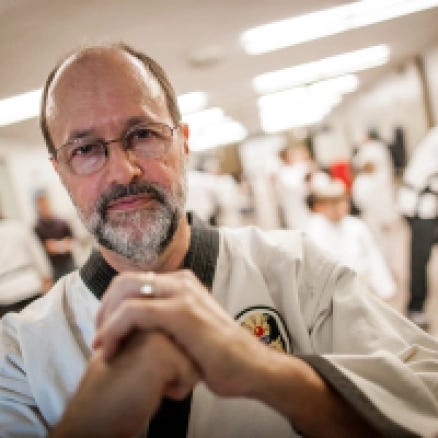
Whether you are training one elderly person or a group of elderly people, help them feel loved and safe. The Bible clearly shows that God cares for elderly people and expects younger people to show a similar care for them. Elderly people should be respected and protected.
Physical Training
Once you’ve helped an elderly person understand the emotional aspects of self defense, you can move forward to physical training. Most older people I’ve trained have some ability to move away from danger, but speed, agility, strength, and endurance may be a challenge. That’s something you can determine as you get to know your older student(s). Some older people don’t mind admitting their limitations, but some may. Be sensitive and gentle in how you approach the subject of physical response to attacks.
I teach children, teens, and younger adults to do one of five things when they sense danger:
Run
Escape and run
Stun and run
Throw and run
Fight and run
Notice that ‘running’ is part of all five responses. While that works for the majority of people you may train, vulnerable populations may not be able to run from danger. That makes ‘awareness’ and ‘physical response’ even more important.
Learning to Escape Danger
Personal fitness is a key to any person’s ability to respond positively to physical attack and escape danger. Exercise and diet are primary aspects of achieving that goal.
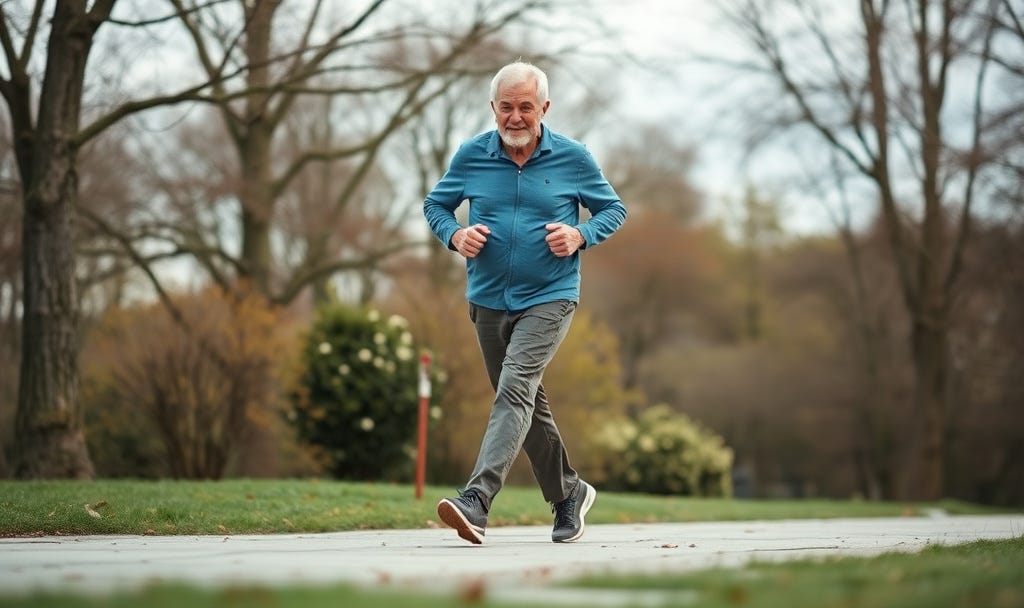
Walking may be one of the best exercises for elderly people. Some of the benefits of walking include:
strengthen muscles
help prevent weight gain
lower risks of heart disease, stroke, diabetes, and osteoporosis
improve balance
lower the likelihood of falling
Even if an older person is not able to ‘run’ from danger, they can ‘walk quickly’ to a safe place. Learning awareness often puts elderly people in a good position for safety because they won’t leave a building or car if they see something nearby that could be dangerous (e.g. someone hanging around their house, car, or store). Your students should know that it’s a good thing to ask someone for help in getting to and from a building to a car. Attackers usually look for older people who are alone. If they see an older person with someone else, they will often keep their distance.
The ‘Buddy System’
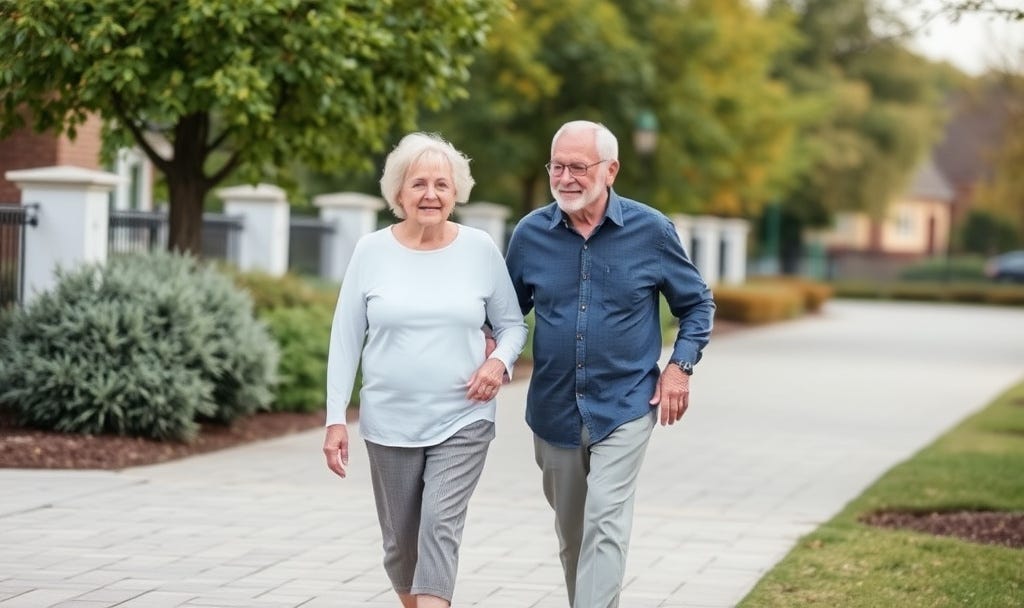
The Buddy System is a good thing to teach older people. It’s better to go places with a friend or family member, or they can ask someone who works at a store to walk them out to their car.
If an older person does happen to be outside alone, they can also call for help and fight back if necessary. We’ll be sharing some of the physical skills they can learn as our series continues. However, the better their physical fitness, the better they’ll be able to resist a physical attack.
Rebuilding Strength and Balance
Older people often lose some of their physical strength as they age, but that doesn’t mean they can’t rebuild some of what they’ve lost or hold on to what they have. Progressive weight training, eating a healthy diet, and being involved in a good exercise program (e.g. walking, biking, swimming, hiking, T’ai Chi, martial arts) are keys to building fitness and strength as we age.
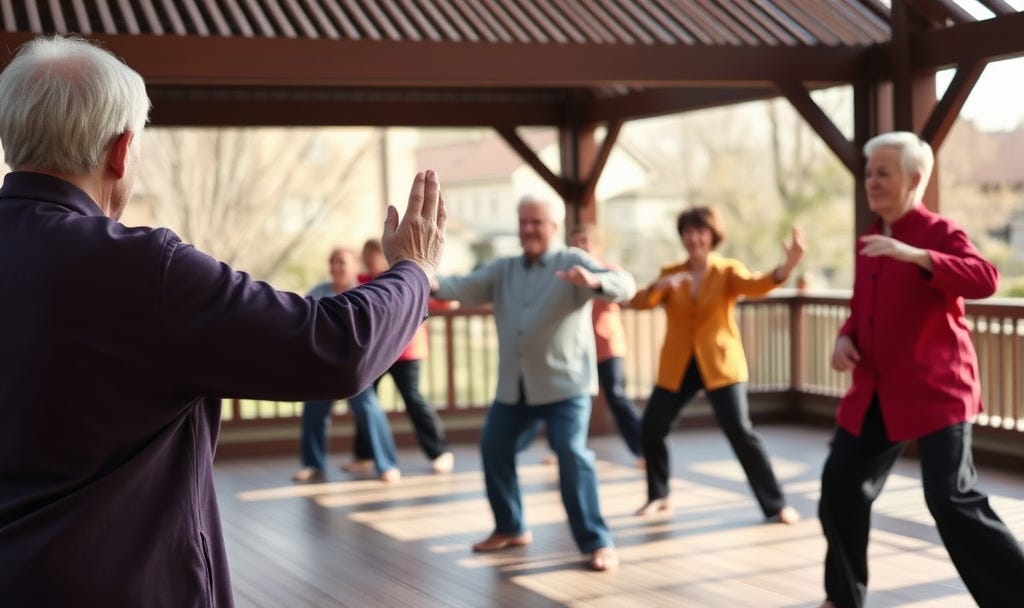
Many gyms and fitness centers offer free programs for senior citizens. You can determine whether to train elderly people for free or charge a small amount based on what it costs you to train (e.g. renting a building, buying equipment, etc). T’ai Chi is one of the least expensive programs because no special equipment is needed, plus it can be practiced anywhere. Whether you’re a certified T’ai Chi instructor or a Master Trainer, consider teaching older people for free or a small fee to cover your costs.
Martial arts is one of the best fitness programs available. You can tailor the exercises to the age and physical abilities of each person and group you train. I’ve taught classes where some of the older people could stand and move for 30 minutes or longer, while others could not. I taught those people how to hold on to the back of a chair or to sit in the chair to practice with the class. Always let them know that whatever they choose to do is fine with you. That’s part of demonstrating love and respect for every person you teach. The idea is for them to move and have fun while learning how to move fluidly and safely.
Training Safely
Every class you teach should emphasize safety. That’s true for people of all ages, but especially for older people. Let your students know that safety is your number one concern and that you are always open to them expressing their concerns about anything the class is doing.
You may find it helpful to require students to get a doctor’s approval before starting classes with you. That can be good for them and for you. If their doctor has any concerns, they can include that information in the approval note your student gives you. Being aware of a vulnerable population’s ‘vulnerability’ is important for making your class a safe place for everyone.
One concern older people have is falling and injuring themselves. Keep your eyes out for anything in your training area that might cause someone to fall. That can include fluid spills on the floor, loose rugs, obstacles in the room, children running into people, etc. Elderly people are also more prone to stress fractures, so limiting the training time may also be helpful for them.
Next Time
Which system of self defense is best for elderly people? We’ll look at several options in the next part of our special series, Protecting The Vulnerable.
Sensei McGee is a 9th Degree Black Belt in Yon Ch’uan Martial Arts and a Master Trainer in Hwa Yu T’ai Chi under Grand Master Robert Xavier. Mr. McGee is also a 7th Degree Black Sash in Shaolin Kung Fu and a 3rd Degree Black Belt in Matsumura Seito Shorin Ryu Karate under Grand Master Stephen Van Camp.
Please Subscribe and Invite Others
I hope you will subscribe to Self Defense and invite friends and family members to subscribe as well. Subscribing means that each new newsletter will arrive in their inbox as soon as it’s published. Articles will also be available under the Self Defense section of this Substack website.
How Do I Subscribe To A ‘Section’ On Substack?
If you’re a new subscriber to a publication on Substack, you’ll receive all sections by default.
If you’re already a subscriber and the writer has created a new section or sections, you’ll need to subscribe to them in order to receive a new email newsletter or see a post in your app Inbox.
I am here to help you, so please share your comments, concerns, and questions about self defense. Even though I’m emphasizing “Women’s” self defense, the principles and techniques I’ll share are just as applicable for boys and men.
You can be attacked anywhere, at anytime, by anyone. Be ready.