Journalism Best Practices (Part 8)
The Newscast

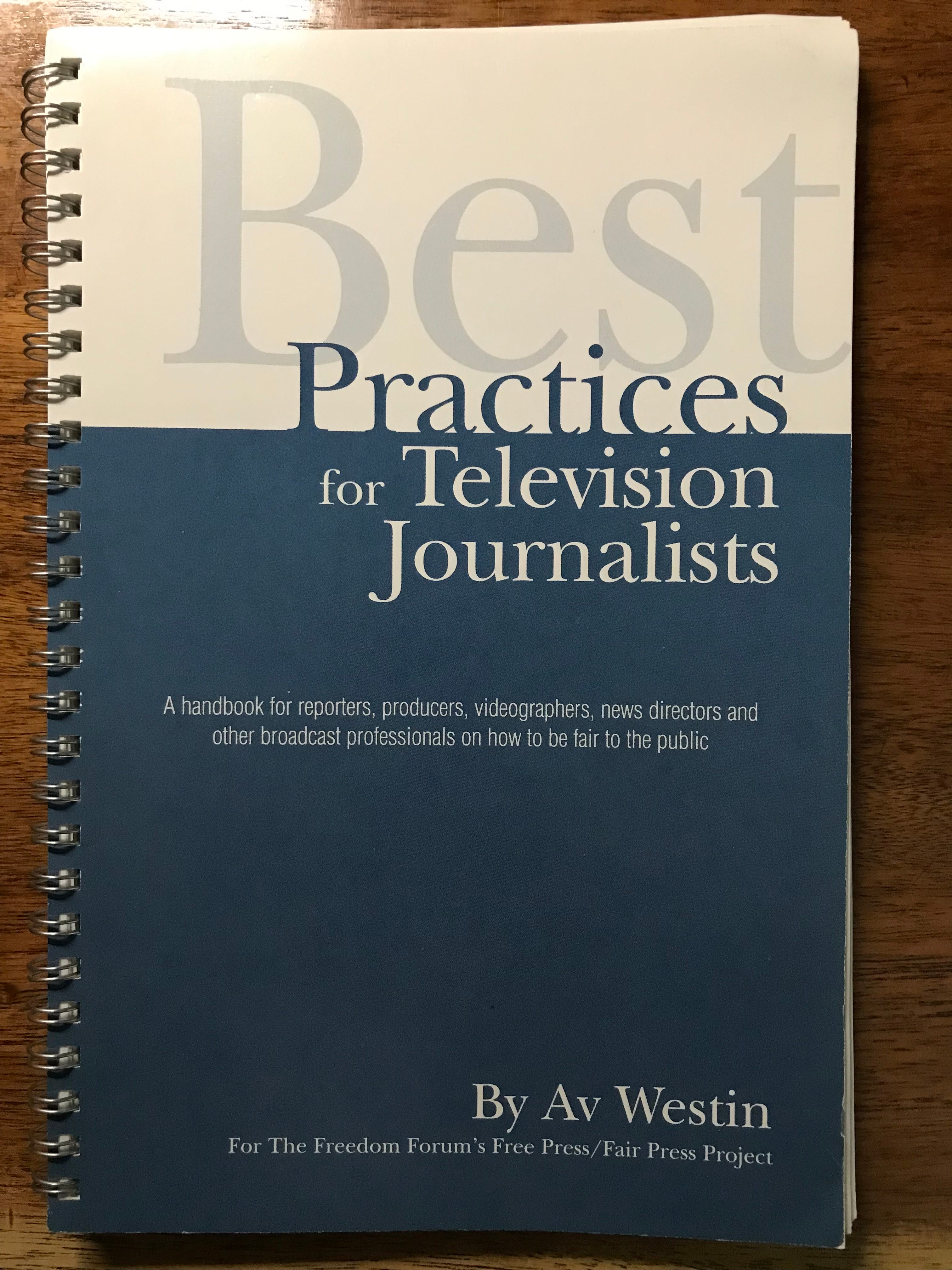
First, understand the challenges involved in getting a single evening news program on the air, and the even more brutal test faced by “24/7” news channels. There are no absolutes, and in the competitive and bottom-line-oriented environment of TV news, goals collide with extremely harsh reality. Practical solutions are seized upon simply to get the broadcast on the air.” Best Practices, p 53
That’s one of the ‘sound bites’ that Av Westin used in Best Practices for Television Journalists. He wrote the handbook in 2000 as part of The Freedom Forum’s Free Press/Fair Press Project. I was one of the participants interviewed for the project and am pleased to share some of what came from it. I hope it will inspire you in your quest to be the best journalist possible.
Deadlines
I learned about ‘deadlines’ my first day as a news reporter. If I was assigned a story for the 8am newscast, I better have my story written, edited, and ready for air prior to 8am. If I didn’t, I was in the news director’s office to find out why I missed the deadline.
The same was true for newspapers. I had deadlines to meet every night for the morning paper and deadlines to meet every morning for the afternoon paper. That’s while I was also meeting deadlines for a television news department and feeding reports to radio and TV networks and news wire services (e.g. AP, UPI).
As I think back on those busy and often hectic years, I honestly don’t know how I did it. Being younger helps, but it was still a lot of pressure. ‘Don’t ever miss a deadline.’ The voices of my early news directors and editors still echo in my brain to this day. Even though I’m in my late 70’s and retired from the fun of the daily news grind, I still function on deadlines. Once that gets in your blood, it’s hard to stop thinking any other way.
However, deadlines can have their challenges —
As a reporter, you tried to come back with as good a story as you could get, but also you knew that you had to be ready so you could get on the air. Content would be compromised at times. News value would be compromised just so you could make the slot. Best Practices Sound bites, p 54
You do the best you can in editing scripts and trying to catch mistakes. It’s not always easy. Things do slip and get on the air. Best Practices Sound bites, p 54
That is true, but I appreciate the fact that 25 years ago journalists cared about getting things right — even under intense pressure. Unfortunately, I get the impression that some journalists today intentionally get things wrong (completely or partially). That bothers me. Truth should always be the goal of journalism.
Choosing What’s News
The evening news is a combination of the news of the day and features stories, which in some newsrooms are called “takeouts” — reports that merit more in-depth time or explanation. They play off recent news stories but not necessarily the news of that day. They are stories that producers think people are interested in and that can explain something. Best Practices, p 53
I quickly discovered as a news manager that there was no way I could squeeze all the important news of the day into one newscast. So, how do journalists choose what’s news?
The governing criterion is “elimination rather than inclusions.” And the decision-making is done under almost unfathomable time pressure.” Best Practices, p 53
There are no absolutes, but there are a few axioms, including: What’s important? What should people know? Some newsrooms ask three questions in assigning background reports and deciding whether to include material: 1. Is my world safe? 2. Are my home and family safe? 3. If they are, what else has happened in the world that affects them? As opposed to specifically dealing with what is happening, try to answer the question, “Why are things happening?” Viewers can find out what happened in a thousand different places. But why they happened, what it looked like, when it happened and what it mans to the audience are areas that can be even more useful. Best Practices, p 54
One of the parts of The Freedom Forum’s Free Press/Fair Press Project I liked best was the ‘sound bites.’ That’s where Av Westin included comments from me and other journalists on a variety of subjects. Here’s an example:
The first criterion should be: “What’s important, what should people know? What should we be telling them with our valuable time?
I agree. My rule as a news manager was to ask every journalist in the newsroom if they had any story ideas that impacted viewer safety. If there were no safety issue stories, we moved on to the next set of important stories.
24/7 Pressures
My early days in radio news were based on five or ten-minute newscasts at the top and bottom of each hour. My early days in television were based on a morning newscast, a noon newscast, a 6pm newscast, and an 11pm newscast. That’s the way it was for many years. However, that all changed with ‘24/7.’
In the case of the “24/7” news operations, ratings pressures set the tone. Story selection is determined by whom the audience is and what executives think is going to attract viewers. Best Practices, p 53
Even though ratings were always an issue during my career — even in the 1960s — journalists decided what was news. Of course we hoped that our ratings would be good, but ratings were not the driving force for what we decided was the news we would cover and report. We covered the stories that we believed — as professional journalists — were the most important stories to cover for our audience.
Being Fair
One of my ‘absolutes’ for a newscast is to ‘be fair.’ Here’s Av Westin from 25 years ago:
In emotion-filled social issues, one side is usually advocating change while the other is defending the status quo. Often the advocates of change are given the first opportunity in a report to present their ideas. Producers or reporters put the dramatic pictures suggesting change up front, establishing a mood for the remainder of the piece. The “other side,” those resisting change, can find itself having to defend, react and answer. The rebuttal frequently fails to achieve enough emotional or factual punch to overcome the initial advantage. Hence the reports are unbalanced … Producers and reporters should always ask themselves how the “other side” would perceive what is being reported. They may not like it, but they should be able to acknowledge that the presentation is fair and accurate. Best Practices, p 56
How much things have changed in the news media in just a short 25 years! I rarely see, hear, or read news that is ‘fair and accurate’ — especially from national news outlets. It’s as if many journalists today have a personal or corporate ‘agenda’ to push. That means they will ‘manipulate’ news coverage to meet their agenda. That is not fair to the ‘news consumer’ and should never be the goal of a ‘free press.’ The ‘press’ (news media) is ‘free’ for the purpose of reporting truth, not being the propaganda arm of any political party or particular agenda. Accuracy is key to a vibrant ‘free press’ that will serve the information needs of a ‘free society.’
In television, on-air credibility begins with accurate reporting. Accurate reporting begins with accurate news gathering. It’s obvious. Getting the facts and getting them corroborated is the bedrock of journalism. Best Practices, p 57
Conclusion
I am grateful to Av Westin and The Freedom Forum’s Free Press/Fair Press Project for the opportunity to be one of the participants included in its publication. I highly recommend the 25-year-old handbook to today’s journalists, news managers, station owners, and corporate media. You can find it for sale on Amazon here. None of the people who participated, myself included, received any compensation from the sale of the handbook. My personal reward was and continues to be part of something that I hope will make a positive difference in newsrooms across the country.
I had already been in the news business for more than 30 years when Mr. Westin interviewed me for the handbook published in 2000. The news business had already changed in many ways during those 30+ years (not always positive), so it was good to talk with a man who cared about accuracy and fairness in journalism. Westin was a product of network radio and television beginning in 1947, so he had seen many changes in the medium when he worked on the Free Press/Fair Press project.
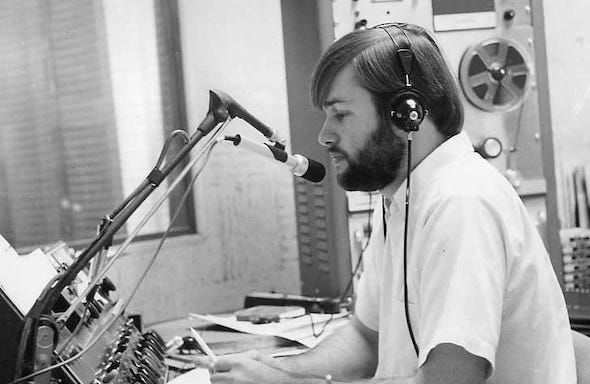
I started in radio news in 1967 — 20 years later. People like Westin were my mentors and earliest news directors in the 60s and 70s. We didn’t discuss politics or our personal views on news topics. We were ‘independents’ by design. Our goal was to provide the public with news coverage that was accurate and fair. Personal opinions and agendas were not allowed in what news we covered or how we reported the stories. That’s what I mean by ‘Real Journalism.’
You can read the entire series about Journalism Best Practices on this Substack or at GraceLife eBooks - Journalism.
Comments and Questions Welcome
I hope these thoughts are helpful to you. Please share your comments and questions and I will respond as quickly as I can. If you like what we’re doing in this newsletter, please let your friends know about it so they can subscribe.
Newsletter Purpose
The purpose of this newsletter is to help people who work in the fields of journalism, media, and communications find ways to do their jobs that are personally fulfilling and helpful to others. I also want to help news consumers know how to find news sources they can trust.
[The Real Journalism Newsletter is published every other Tuesday morning — unless there’s ‘breaking news!]